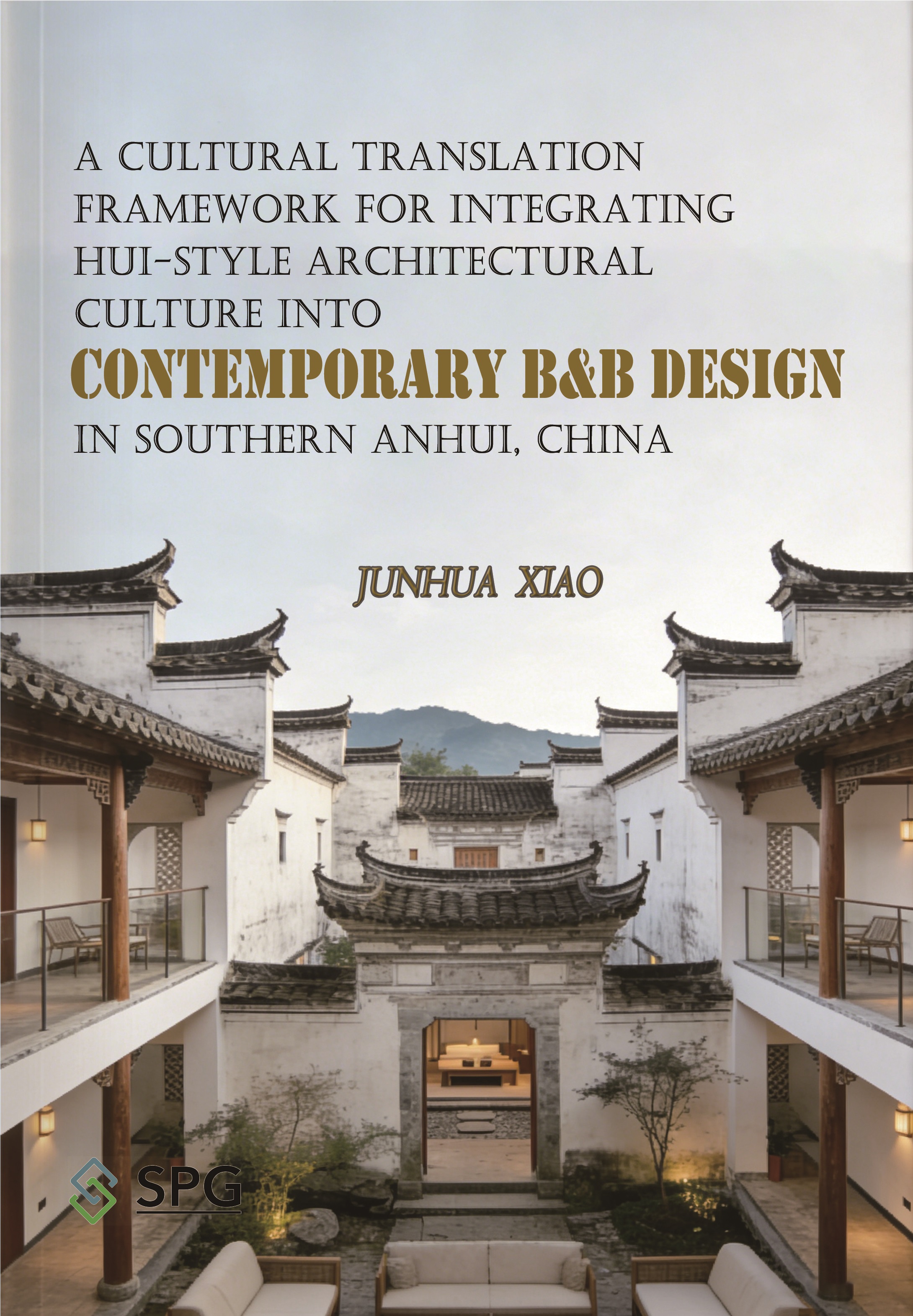
A Cultural Translation Framework For Integrating Hui-Style Architectural Culture Into Contemporary B&B Design In Southern Anhui, China
Published Date: October 20th, 2026
Page Length: 409
Language: English
ISBN: 978-1-80053-541-1
Price: £42.30
Introduction
DOI: 10.38007/978-1-80053-541-1
Globalization and modernization have intensified cultural homogenization and weakened regional identity in contemporary built environments. Hui-style architecture in Southern Anhui, China, represents a distinctive regional tradition shaped by philosophical values, spatial organization, architectural form, decorative craftsmanship, materials, and colour. In contemporary bed-and-breakfast (B&B) design, however, these cultural characteristics are often reduced to visual references rather than meaningfully integrated with modern spatial, functional, and experiential requirements. This study therefore investigates how Hui-style architectural culture can be systematically translated into contemporary B&B design through a structured and applicable framework. An exploratory sequential mixed-methods design was adopted, beginning with qualitative exploration to identify key cultural elements and translation mechanisms, followed by quantitative examination and validation of the emerging structure. Case analysis, expert evaluation, and user-based assessment were subsequently employed to examine the applicability and effectiveness of the proposed framework in design practice. The findings conceptualize Hui-style architectural culture as an integrated system of intangible and tangible elements and establish a cultural translation framework comprising four complementary strategies: adoption, abstraction, reconstruction, and innovation. These strategies offer different but interrelated approaches to retaining cultural meaning while responding to contemporary functional, spatial, aesthetic, and experiential requirements. The findings further indicate that effective cultural translation can strengthen perceived value, cultural experience, and user satisfaction by moving beyond the direct reproduction of traditional symbols toward more context-sensitive and meaningful design applications. Overall, the study contributes a structured approach linking cultural identification, translation, application, and validation. It provides a practical basis for integrating regional architectural heritage into contemporary B&B design while balancing cultural continuity, functional adaptation, experiential quality, and design innovation.